New Galaxy MoM-z14 - EFAU-E0604-I
New Galaxy MoM-z14 - EFAU-E0604-I
The James Webb Space Telescope detects the most distant galaxy. Already surpassing the limits of the formation of the "Big Bang" theory.
The galaxy MoM-z14, extremely close to the time of the calculation of the beginning of the "Big Bang", destroying several narratives of the formation of the universe after the "Big Bang". The time of the so-called "Dark Age", the period of "reionization", and the period of the "end of the dark age" is really collapsing more and more each day.
We can see in spectroscopy that this galaxy has signs of Nitrogen, Helium, Carbon, and Oxygen. Which would determine that there have already been nuclear reactions in stars that have already exploded, which would determine that stars were formed before. The lifespan of the sun is 10 billion years, and this galaxy is at the time of 280 million years after the "Big Bang". In other words, we would have to have stars that formed and destroyed at a speed totally outside the standards of physics to accept the "Big Bang". The more mass a star has, the faster it dies, but very massive stars implode into a black hole when they explode. So if many stars have a very short lifespan, what we end up with is an immense network of black holes that would completely consume the energy of what is happening around them. And if the beginning of the universe was composed of these massive stars, what we would have is a universe full of black holes, and not what we see today in our universe.
The Galaxy MOM-z14 is currently the most distant galaxy among the most distant galaxies, and what we can analyze is that there will be many other more distant galaxies, and therefore they will increasingly nullify the Big Bang theory.
In this way, the act of trying to preserve the ideology of the "Big Bang" is becoming more and more problematic.
The James Webb Space Telescope detects the most distant galaxy. Already surpassing the limits of the formation of the "Big Bang" theory.
The galaxy MoM-z14, extremely close to the time of the calculation of the beginning of the "Big Bang", destroying several narratives of the formation of the universe after the "Big Bang". The time of the so-called "Dark Age", the period of "reionization", and the period of the "end of the dark age" is really collapsing more and more each day.
We can see in spectroscopy that this galaxy has signs of Nitrogen, Helium, Carbon, and Oxygen. Which would determine that there have already been nuclear reactions in stars that have already exploded, which would determine that stars were formed before. The lifespan of the sun is 10 billion years, and this galaxy is at the time of 280 million years after the "Big Bang". In other words, we would have to have stars that formed and destroyed at a speed totally outside the standards of physics to accept the "Big Bang". The more mass a star has, the faster it dies, but very massive stars implode into a black hole when they explode. So if many stars have a very short lifespan, what we end up with is an immense network of black holes that would completely consume the energy of what is happening around them. And if the beginning of the universe was composed of these massive stars, what we would have is a universe full of black holes, and not what we see today in our universe.
The Galaxy MOM-z14 is currently the most distant galaxy among the most distant galaxies, and what we can analyze is that there will be many other more distant galaxies, and therefore they will increasingly nullify the Big Bang theory.
In this way, the act of trying to preserve the ideology of the "Big Bang" is becoming more and more problematic.
Vídeos relacionados
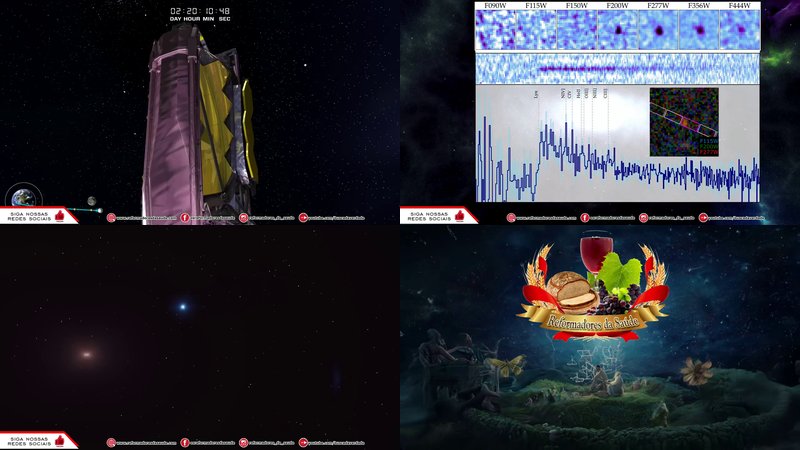
Neue Galaxie MoM-z14 - EFAU-E0604-A
02:22
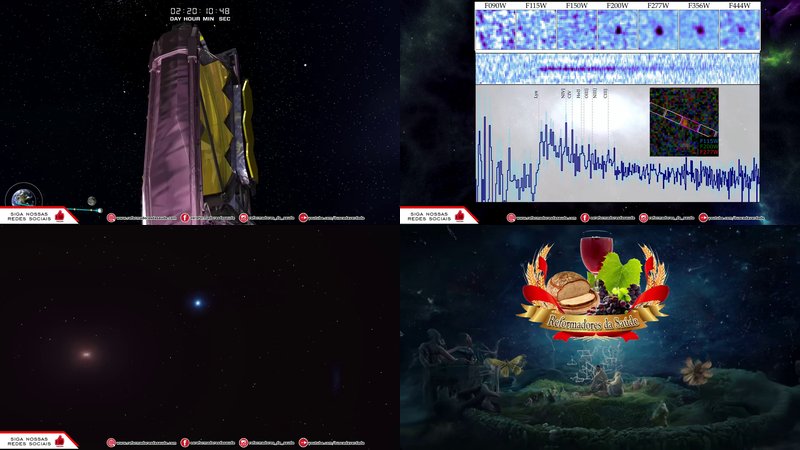
Nueva galaxia MoM-z14 - EFAU-E0604-E
02:22
Univers dans un trou noir - Conversation avec l'IA - EFAU-E0803-F
16:42
Ein ewiges Universum voraus? Allgemeine Relativitätstheorie und Dunkle Energie EFAU-E0804-A
20:10

Universum in einem Schwarzen Loch – Ein Gespräch mit KI – EFAU-E0803-A
16:42

¿Cómo Predice la Ciencia un Universo Eterno? | Relatividad General & Energía Oscura EFAU-E0804-E
20:10