#Calories #gastoenergetic #basal energy #BMI #DRI
We usually find on labels, the amount of nutrients contained in a food package, a daily requirement value of normally 2000 kilocalories.
But do all human beings need a fixed amount of 2000 kilocalories? The answer is no. Every individual expends energy from their body differently. If an individual has a higher basal speed, he consumes more calories, or if an individual does a lot of physical exercise, he spends more energy than a sedentary individual.
Thus, measurement mechanisms are needed to know how much energy each individual actually expends during their day.
The gold standard, which is the most accurate way of measuring these days, is using double-labelled water. Water has two hydrogen atoms and one oxygen atom. Using isotopes of hydrogen and oxygen to make water, we have a marked water. Isotope is an atom with a difference in the number of neutrons. In this way, an individual's energy expenditure can be calculated, seeing how much these isotopes are lost within the individual's body.
This is because the energy expenditure reaction needs water to take place. They define this method as the gold method, which means the best possible method for measuring something.
The cost of this type of analysis is very expensive, but we can find these studies in the DRI. DRI is the US Institute of Medicine study that determines dietary intake benchmarks.
At the end of this study we have the appendix with "Dubly labeled water data used to predict energy expenditure". Composing a group of people in which was stipulated by double-marked water, energy expenditure.
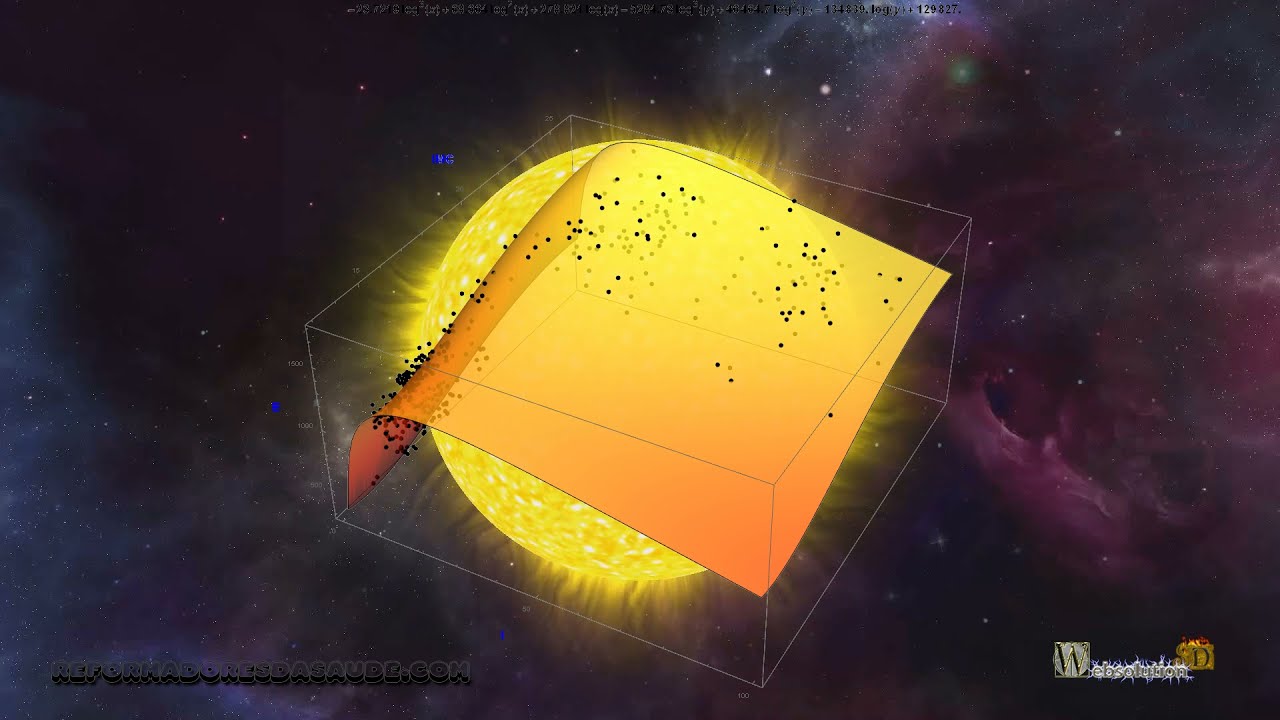
To make an estimate, based on the individuals tested, we can make a mathematical function that fits the values of the individuals. Thus, the results of each individual are placed in a three-dimensional space, in which we have 3 points, the basal energy expenditure, which we define by "E", the individual's age defined by the letter "I", and the body mass index we'll call it "BMI". With these points we draw a three-dimensional graph that tries to fit the points as best as possible.
In the graph we can see the adjusted points, and with them we can build a curve in the central part of the points to observe the most probable values. Thus, we have the basal energy expenditure, and that it reaches a little more than fifteen hundred calories. So an average of values for two thousand calories as stipulated on the labels is acceptable. Such data are bases for healthy individuals, and if they feel anything out of the ordinary they should consult a professional.
But as an established standard, two thousand calories are used as a standard for nutritional information for the population.