Is there energy in a vacuum? Many experiments show that energy appears and disappears in places where nothing is detected. Scientists refer to these fluctuations as quantum fluctuations. At this point, they develop the idea of phantom energy, in which energy appears and disappears.
The big question is whether this energy is free or trapped.
What does this mean? If it is released, can it be extracted? If it is trapped, can it not be removed? Many cosmologists would prove their ideas if it were possible to remove it. Would it be the possibility of ghost energy, or the variation of dark energy? The question is linked to whether if something travels the Planck distance, would it expend energy or not?
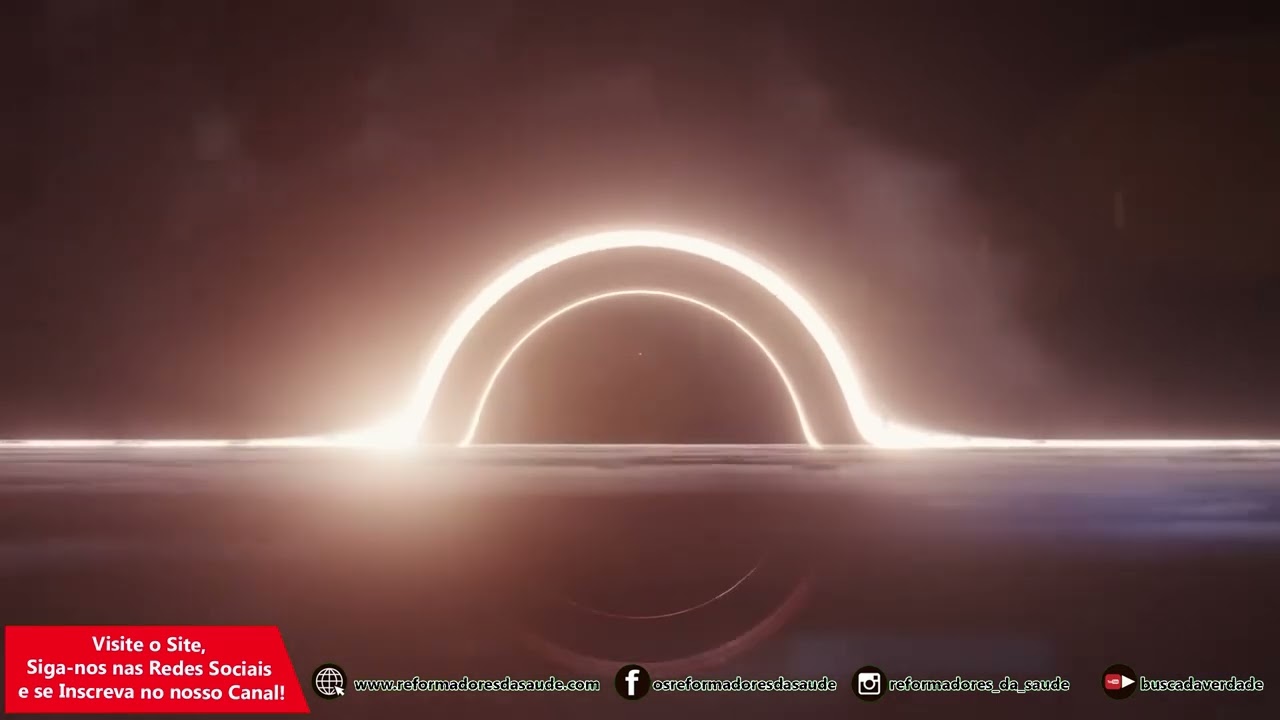
Let's imagine this: the energy in the system can appear as a field, attached to the body of the universe itself, or separate. Now, let's put a black hole in the scene. A black hole is the object that most contradicts quantum theory, so let's imagine that we are on the threshold of a black hole, observing the Planck distance. Now, let's imagine that the threshold is at the center of the Planck distance, and energy and non-energy occur. Thus, the energy is released because it is outside the threshold of the black hole, and the non-energy takes energy from the black hole. And so we imagine the idea that black holes can evaporate. An idea from physicist Stephen Hawkings.
Another similar situation is to define that at the Planck distance it is not known when one is inside or outside the limit, and what by some quantum rule appears outside, what was inside. And then escapes the black hole.
This question is the big problem: what is the probability of what is inside being outside? Remember that the black hole, in its laws of existence, does not obey quantum theory. This generates the limit at the Planck distance, to idealize that there we have the quantum, because of the Planck distance, would be at the point of inside and outside at the same time.
Let's do an interesting analysis. Imagine that a supermassive black hole is at the threshold of the Planck distance, a quantum of energy, that is, the idea of the smallest amount of energy possible, and is above any energy released. The question would be, where would be the place that would be above the Planck distance?
And what would the space be like for this energy to be compacted, would it be a cube, or would it be a sphere? Well, in any three-dimensional space, in which there cannot be a space smaller than the Planck distance, there would be a larger diagonal. This would make this space factor of the Planck distance unfeasible for removing energy from a black hole.
In a way, the idea of the Planck distance only makes sense in one dimension, and so the Planck volume loses its rational meaning.